New Exhibition Announcement!
|
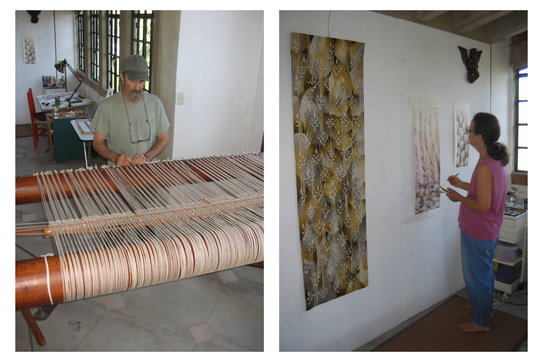
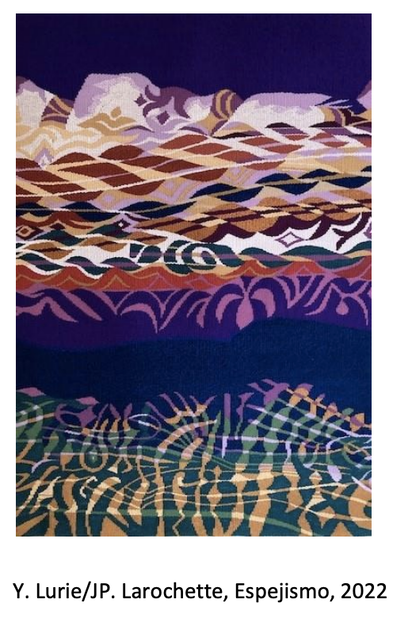
Couples in Craft June 3rd, 2023 through September 2, 2023 Includes: Jim and Veralee Bassler, Susan Garson and Tom Pakele, Nobu and Leslie Nishigawara, Yael Lurie and Jean Pierre Larochette, Susan and David Wulfeck. Couples in Craft highlights artist couples that specifically work in fiber and ceramics, either collaboratively or independently. While very different in their physical qualities—malleable and rigid, vegetable and mineral—both media require methodical construction processes that can take years to master. CRAFT IN AMERICA CENTER 8415 W. Third St. Los Angeles, CA 90048 (323) 951 0610 https://www.craftinamerica.org/exhibition/sorted/by-current-and-upcoming |
|
Anatomy of a Tapestry
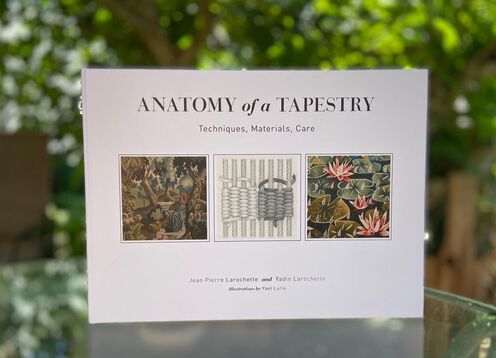
Anatomy of a Tapestry: Techniques, Materials, Care
By Jean Pierre Larochette, Yadin Larochette and Yael Lurie-Larochette
The history, legacy, and boundless creativity of weavers over the centuries is the base in this helpful guide for new weavers, seasoned tapestry artists, and enthusiasts. Tapestry weaving is an art form that has been around since antiquity, and these insights from renowned artist Jean Pierre Larochette offer 30 traditional techniques built upon weavers' centuries of work. A fourth-generation French Aubusson tapestry weaver, he gives us a glimpse into the multiple combinations, variations, and applications of techniques that form the art of the weaver. Each technique is exemplified by diagrams, woven models, and examples of possible ways of applying it. Expert Yadin Larochette shares theories and approaches to conservation, including new scientific research to help in the much-needed task of preserving these treasures of human creativity for centuries to come. Along with distilling traditional information on the art, this book's precise written instructions and clear visuals--together with its handy lay-flat binding--assist you in both creating and preserving your tapestries.
By Jean Pierre Larochette, Yadin Larochette and Yael Lurie-Larochette
The history, legacy, and boundless creativity of weavers over the centuries is the base in this helpful guide for new weavers, seasoned tapestry artists, and enthusiasts. Tapestry weaving is an art form that has been around since antiquity, and these insights from renowned artist Jean Pierre Larochette offer 30 traditional techniques built upon weavers' centuries of work. A fourth-generation French Aubusson tapestry weaver, he gives us a glimpse into the multiple combinations, variations, and applications of techniques that form the art of the weaver. Each technique is exemplified by diagrams, woven models, and examples of possible ways of applying it. Expert Yadin Larochette shares theories and approaches to conservation, including new scientific research to help in the much-needed task of preserving these treasures of human creativity for centuries to come. Along with distilling traditional information on the art, this book's precise written instructions and clear visuals--together with its handy lay-flat binding--assist you in both creating and preserving your tapestries.